Knowledge Base
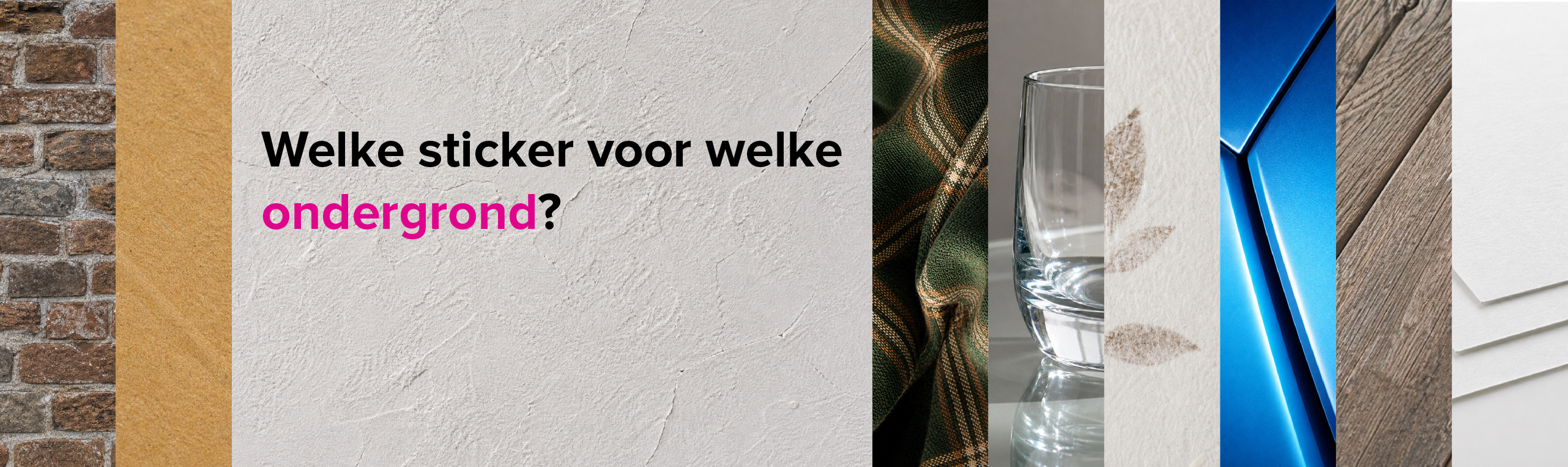
Which sticker works best on which surface?
A sticker that performs perfectly on glass may fail on a rough wall. The right choice starts with the surface: how smooth, clean, porous, exposed and long-term the application needs to be.
Short answer
Choose the sticker based on the surface, not just the look. Smooth surfaces usually work with standard vinyl or window film. Rough, cold, damp or heavily used surfaces require specialist films with stronger adhesive, extra durability or a different adhesive technology.
1. Surface
Smooth or rough?
Glass, painted metal and smooth plastics are much easier than brick, textured paint, concrete or untreated wood.
2. Exposure
Indoor, outdoor or floor?
A floor sticker or outdoor sticker has to withstand more than a label on packaging or a temporary window campaign.
3. Lifespan
Temporary or long-term?
Temporary campaigns often need clean removal. Industrial use usually requires maximum adhesion.
Surface
The surface determines the adhesive choice
Sticker performance depends heavily on contact. The flatter and cleaner the surface, the better the adhesive can grip. Dust, grease, moisture or a coarse texture reduce contact area and increase the risk of lifting.
| Surface |
What to check |
Typical direction |
| Glass and windows |
Smooth, but visibility, removability and installation matter. |
Window stickers, clear film, static film or dotfix. |
| Plastic and metal |
Often suitable when clean, grease-free and not too low-energy. |
Standard vinyl, polymeric vinyl or high tack for difficult plastics. |
| Walls and textured paint |
Texture, dust and paint quality determine whether the sticker will stay in place. |
Wall film or high tack material, preferably tested first. |
| Floors |
Wear, cleaning, walking direction and slip resistance are important. |
Floor sticker material with suitable anti-slip and a durable top layer. |
| Rough or difficult surfaces |
Standard adhesive may not make enough contact with the structure. |
High tack, Roughmark, Alufloor or other specialist films. |
Practical advice
When in doubt, test first
For standard applications the material choice is often straightforward. For rough walls, concrete, floors, cold spaces, outdoor use or special plastics, testing is the safer route.
- Clean, dry and degrease the surface before testing.
- Check adhesion after 24 to 48 hours, not only immediately after applying.
- Decide whether the sticker needs to be removed cleanly later.
- Request samples when appearance, adhesion or surface quality is critical.
Examples
Common material directions by application
Window or glass
For glass, visibility, light transmission, removability and installation are often decisive. Think of window stickers, clear stickers, dotfix or static film.
Floor or walking route
Floor stickers need to handle shoes, cleaning and wear. Choose material that matches the floor and expected traffic.
Wall, stone or rough surface
For texture and dust, standard vinyl is often limited. High tack and specialist materials provide more security.
Installation
Preparation also determines the result
Even the right material can perform poorly if the surface is not prepared correctly. Temperature, dust, moisture, grease and fresh paint all have a major influence.
- Avoid applying to freshly painted or damp surfaces.
- Do not use aggressive cleaners that leave residue.
- Consider temperature during application and the first bonding phase.
FAQ
Frequently asked questions
Which sticker works best on glass?
Many materials work well on clean glass. The right choice depends on visibility, removability, transparency and whether the sticker is used indoors or outdoors.
Which sticker should I use on a rough wall?
Standard vinyl is often not enough for rough walls. Choose a stronger adhesive material and test it on the actual surface first.
Can every sticker be used on floors?
No. Floors require wear-resistant materials and often anti-slip finishing. The right choice depends on the floor and use.
Which sticker is easy to remove?
Temporary window or campaign stickers are often easier to remove than permanent vinyl. Dotfix and static film can be useful for temporary applications.
Why does a sticker sometimes come loose?
Common causes are dust, grease, moisture, texture, low temperature or a surface that is difficult for adhesive to bond to.
When should I ask for material advice?
Ask for advice with rough surfaces, large volumes, outdoor use, floors, long-term applications or clean removal requirements.
Not sure about the surface?
Describe the application, surface and required lifespan. That makes it easier to recommend the right material, adhesive and finish.