Knowledge BaseVinyl lettering and cut vinyl: when should you choose cut film?
Vinyl lettering and cut vinyl are ideal for separate text, logos and shapes without a printed background. Think boat names, vehicle lettering, shop window lettering, doors, panels and signage. Because cutting, weeding and transfer tape depend on the design, this is usually assessed as custom work.
Short answer
Choose vinyl lettering or cut vinyl when you need separate letters, shapes or logos without a printed background. The film is cut, excess material is weeded away and transfer tape keeps everything aligned during application.
Vinyl letteringText without background
For names, text, opening hours, boat names, vehicles and window communication.
Cut vinylShapes from film
For logos, pictograms, areas, decorative shapes and signage in a specific colour.
Transfer tapeClean application
Keeps loose letters and shapes together so the position is maintained during installation.
ApplicationsWhat is vinyl lettering often used for?
Vinyl lettering is often chosen when text needs to be applied neatly without a background. It is popular for boat names, company vehicles, shop windows, doors, wayfinding and temporary campaigns.
- Boat names, registration numbers and names on vessels.
- Vehicle lettering, company vans and technical markings.
- Shop windows, windows, doors, panels and interior applications.

ProductionCutting, weeding and preparing
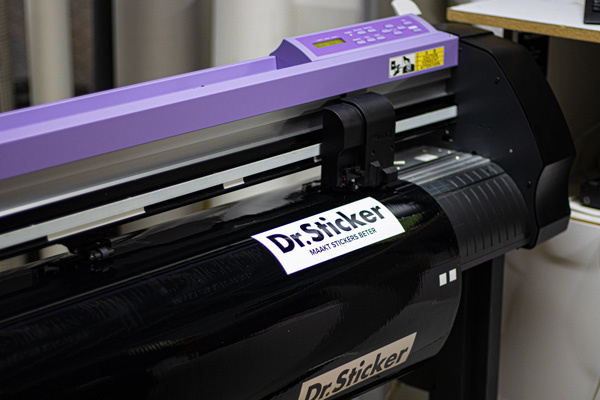
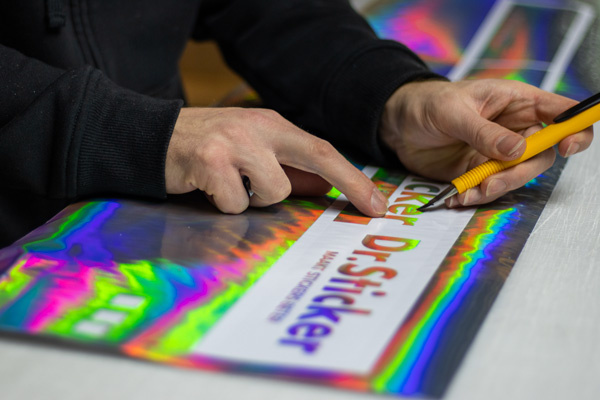
With cut vinyl, the design is cut from coloured film. The excess film is then removed. This is called weeding. The finer the design, the more work is involved in weeding and preparation.
- Suitable for vector files with clear shapes.
- Small details, thin lines and loose dots require extra assessment.
- Complex designs may require a custom quote.
ApplicationWhy transfer tape is important
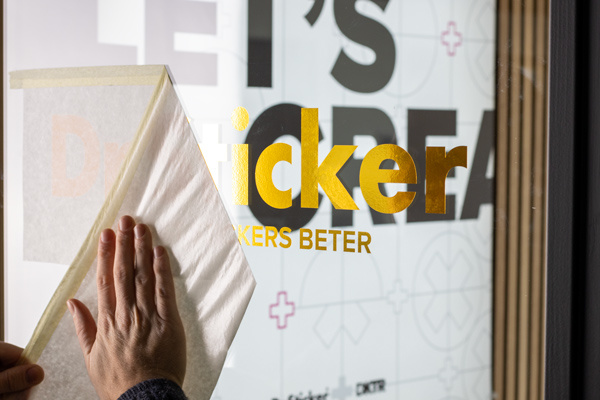
Transfer tape keeps separate letters, dots and shapes in the correct position during application. Especially with multiple loose elements, this prevents crooked installation or shifting.
- Keeps separate letters in position.
- Makes installation of words, logos and shapes easier.
- Important for shop window lettering, vehicles and large text.
 Examples
Vinyl lettering and cut vinyl in practice
These images show the process: cutting, weeding, applying and the final result.
ArtworkWhat should your file meet?
For vinyl lettering and cut vinyl, a vector file is important. The design must be suitable for cutting. Photos, gradients and pixel files are usually not suitable as pure cut vinyl unless they are converted or simplified first.
- Preferably supply a vector file.
- Avoid extremely small details and thin loose elements.
- Clearly provide size, colour, application and surface.
- Request advice or a quote if you are unsure about technical feasibility.
Frequently asked questionsFAQ
What is vinyl lettering?
Vinyl lettering consists of separate letters or shapes cut from film, without a printed background. It is often supplied with transfer tape.
What is cut vinyl?
Cut vinyl is coloured film that is cut into text, logos or shapes. The excess film is then removed.
Can I order vinyl lettering online?
Because size, weeding, colour, installation and application can vary greatly, vinyl lettering and cut vinyl are often handled as custom quote work.
When do I need transfer tape?
Transfer tape is useful when the design consists of multiple separate letters or elements that must stay exactly in position.
Can I make a photo as cut vinyl?
Not directly. Cut vinyl requires clear vector shapes. A photo must first be converted into suitable shapes or produced as a printed sticker.
Which applications are popular?
Boat names, vehicle lettering, shop window lettering, window text, doors, panels, signage and separate pictograms.
Useful next steps
Need vinyl lettering or cut vinyl?
Request a quote with size, colour, application, surface and your design if available. We will assess the best technical and practical route.